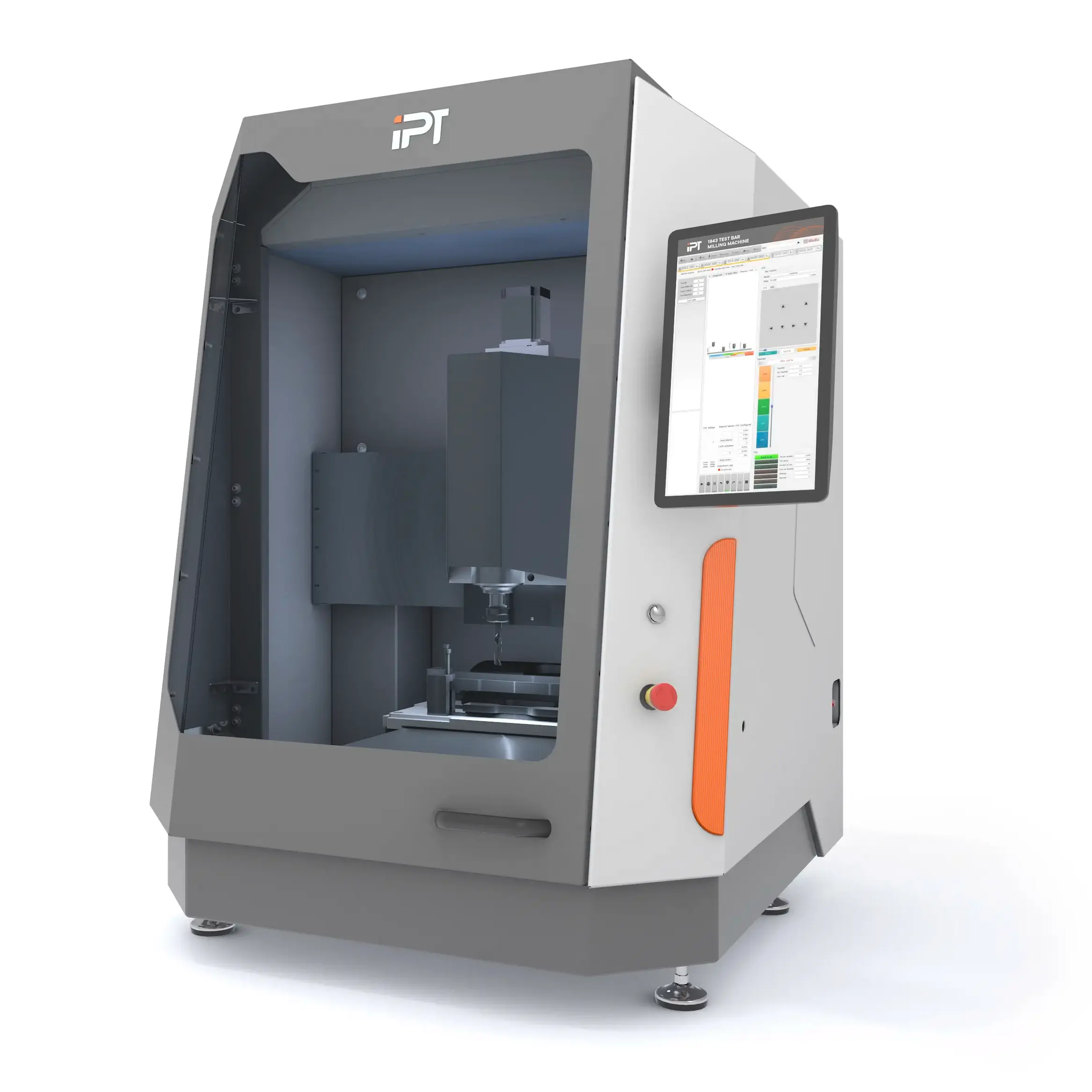
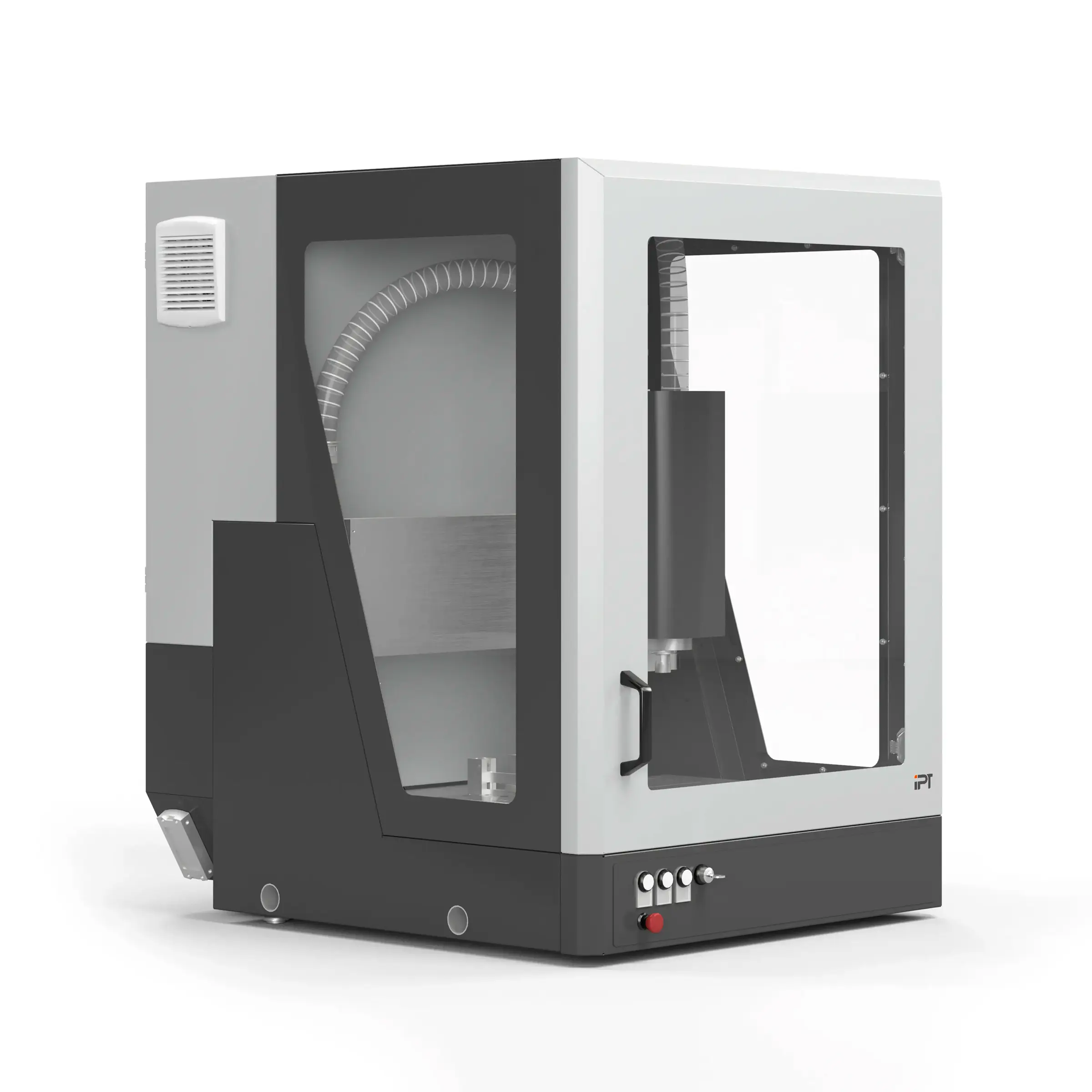
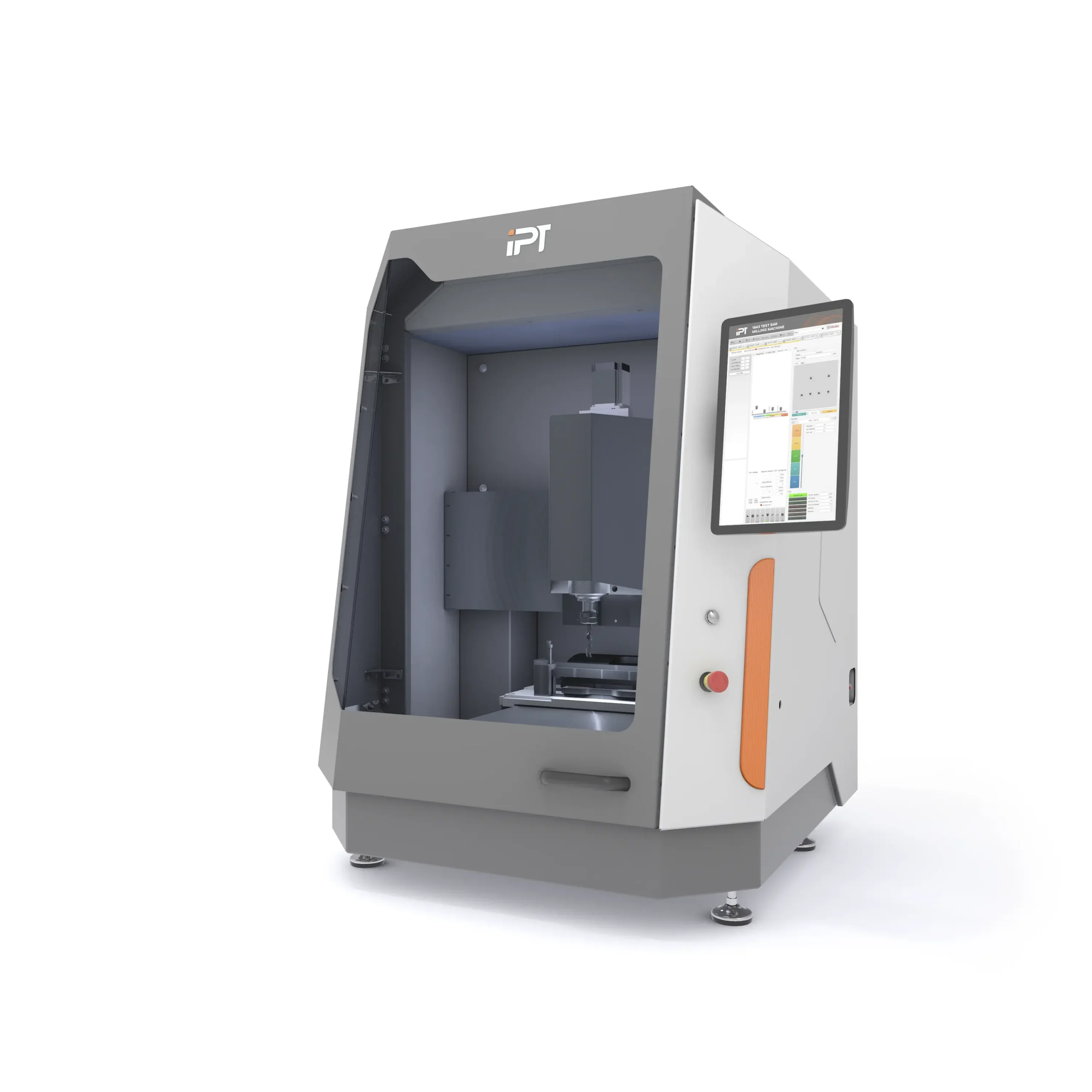
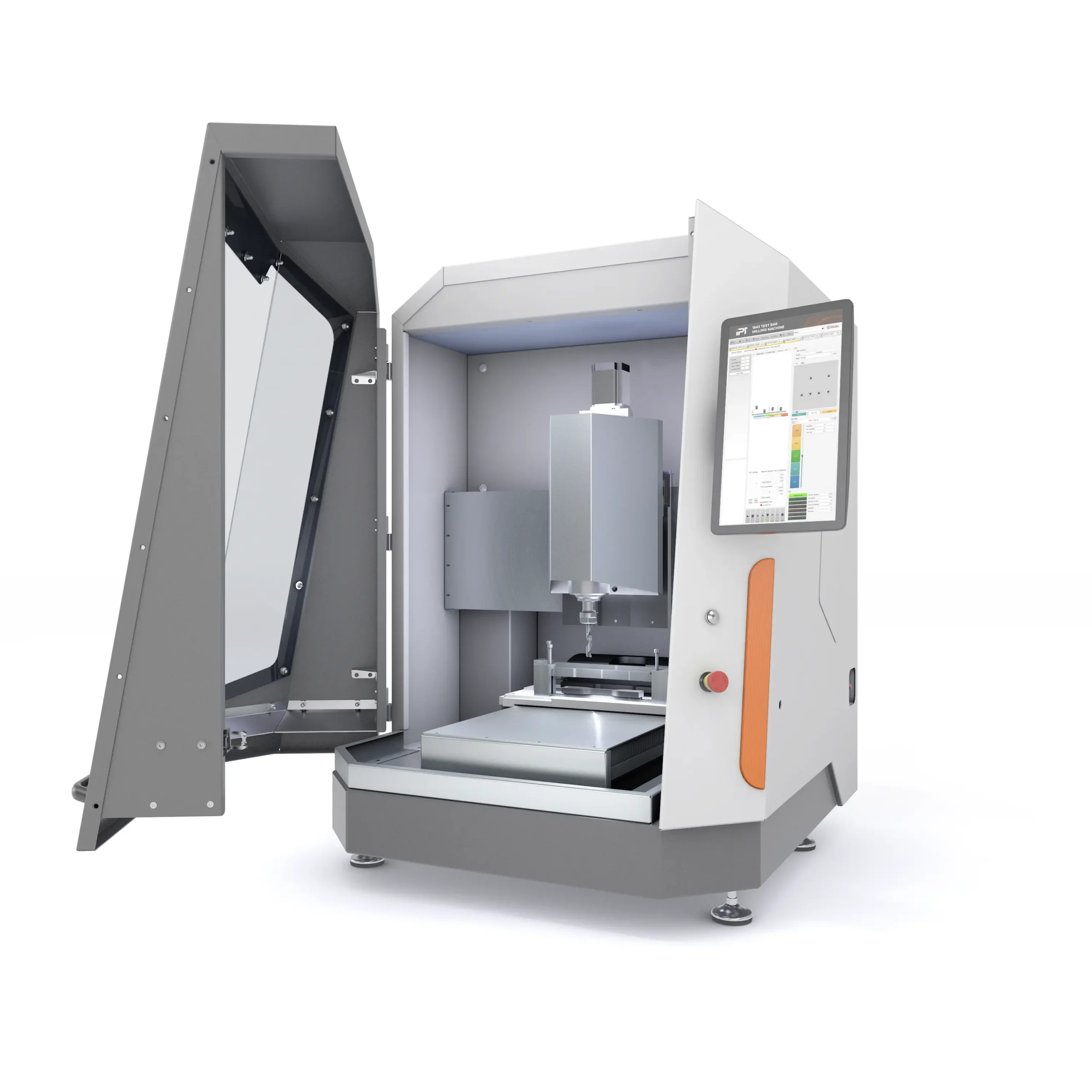
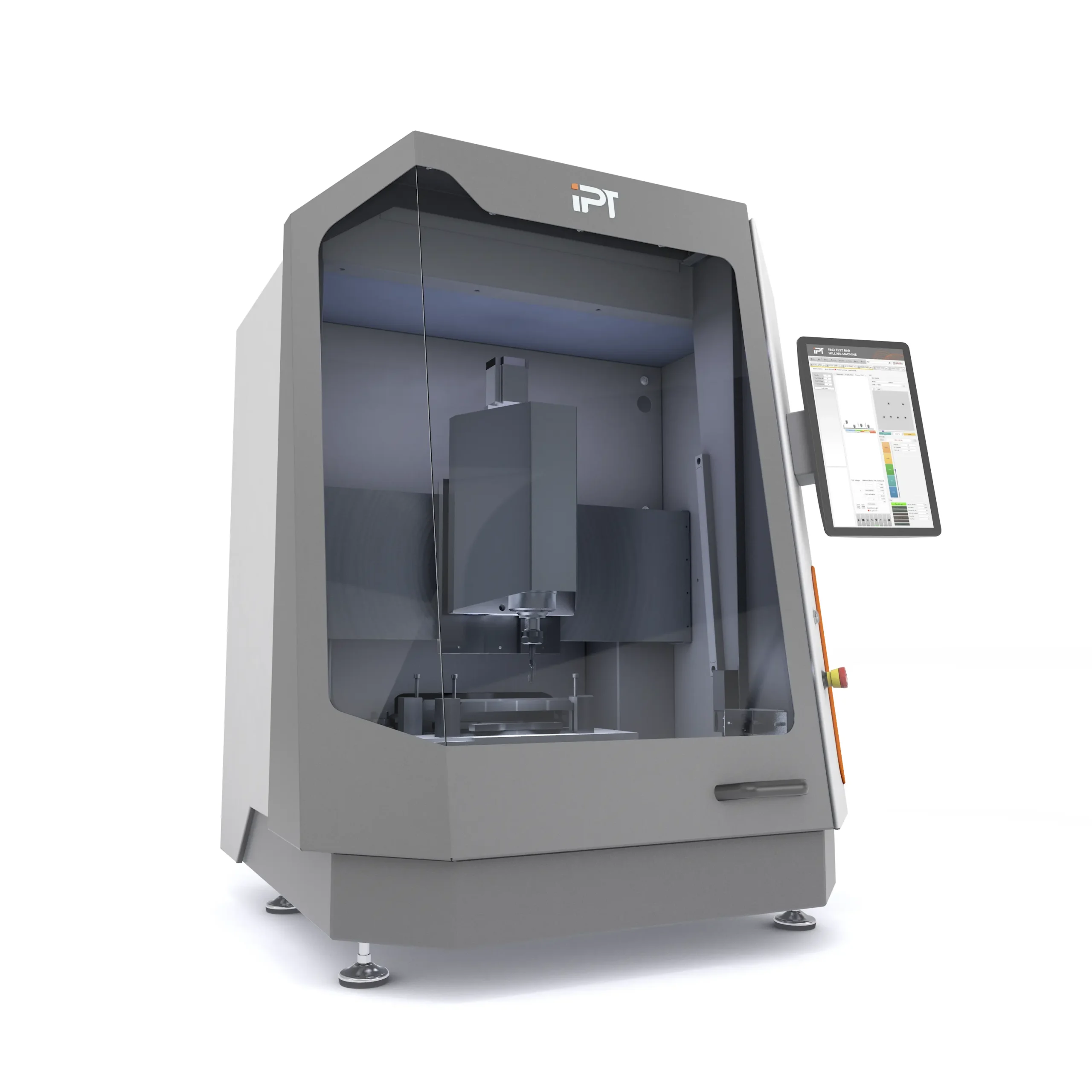
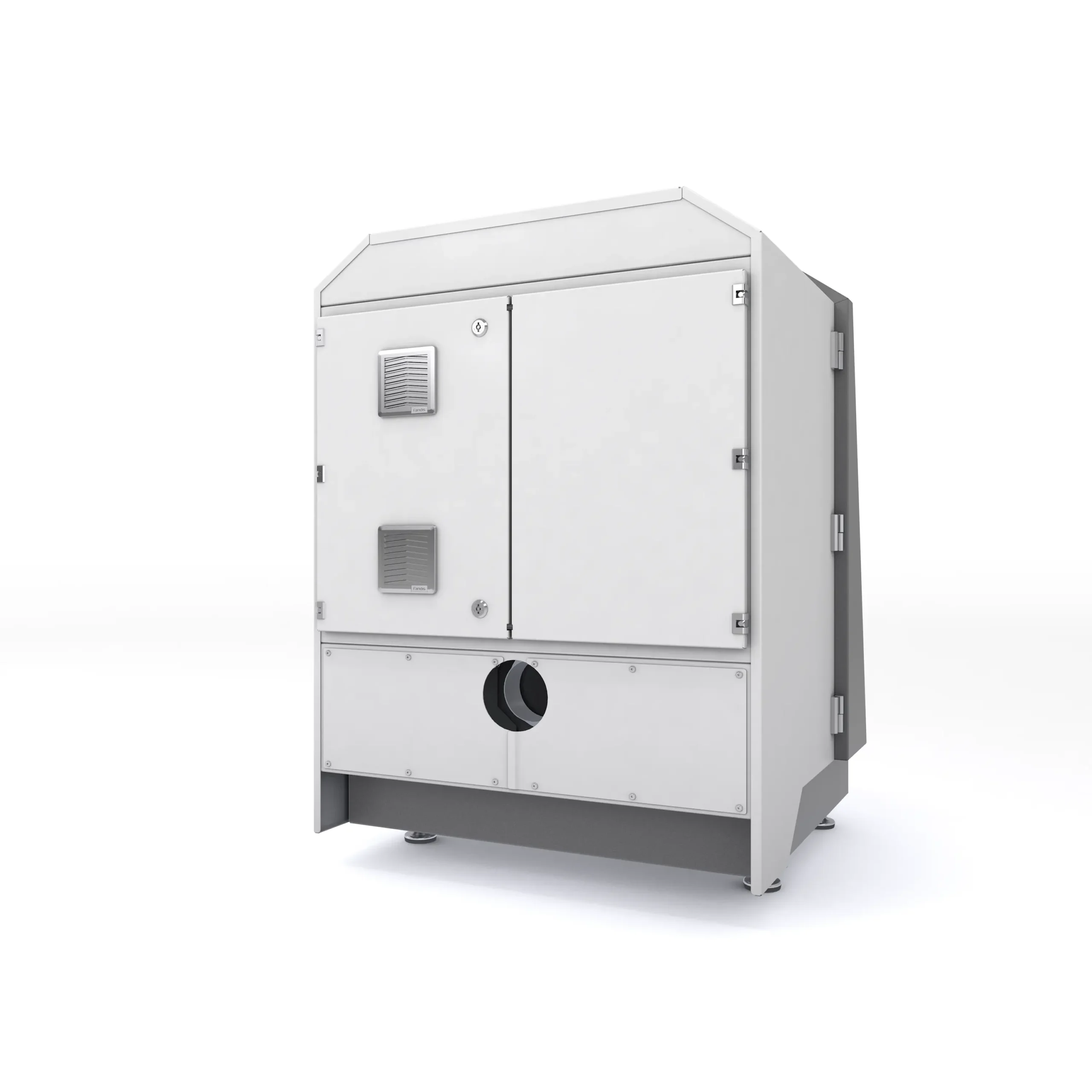
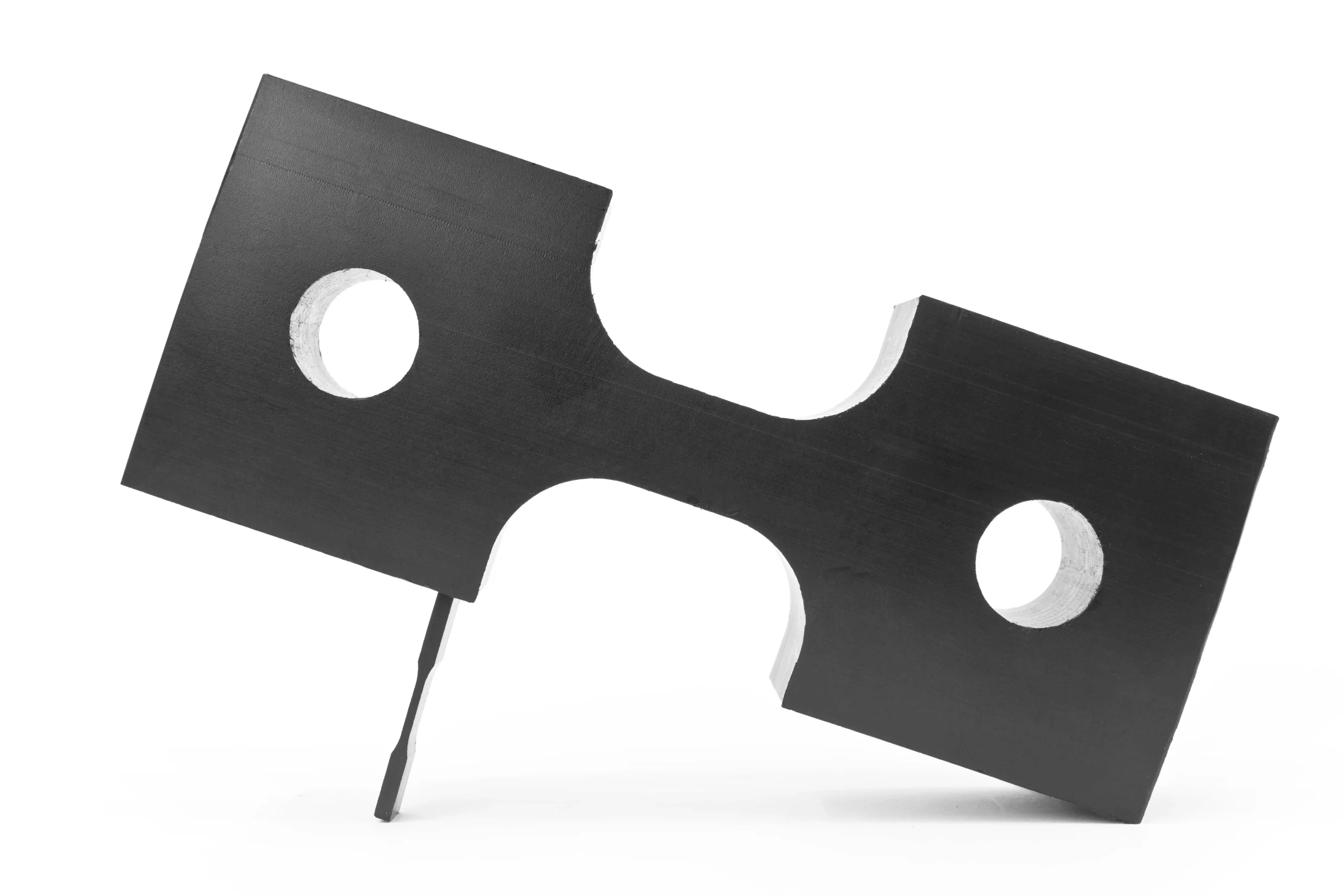
The CNC test bar milling machine enables bar-shaped plastic samples to be produced for tension, pressure, bending and flexural impact tests in accordance with a wide range of standards. The CNC milling machine is a table-top unit with electrically locking protective doors. Pre-configured machining programs for all common bar shapes and visualisation via Windows make it very easy to operate the milling machine. Up to five test bars can be produced in one milling process. The all-round enclosure ensures safety at the workstation during the milling process. A swarf extraction system ensures the workstation remains clean.
The IPT CNC-controlled system was developed specifically for the requirements of plastic pipe manufacturers and is capable of producing test rods up to 50 mm thick.
The basic machine: It is supplied together with the optionally available milling programmes in accordance with ISO, ASTM or all national or international standards with the additionally required clamping devices. The mounting plate of the milling machine has space for up to 5 clamping devices.
Ease of operation: Laboratory personnel do not need any experience in programming CNC-controlled machines, as IPT always supplies the device with pre-installed programmes for the templates required by the end user.
Additional programmes can be added at a later date if required and delivered and installed via remote maintenance. The milling programmes are optimised at IPT to run with optimum machine parameters in order to deliver the best results for the wide variety of plastics. We have taken special care to design the sample clamping devices so that they can also accommodate samples taken from tubes.
Spindle speed: Our CNC milling machine can theoretically be operated at speeds of up to 18,000 rpm. However, based on many years of experience, IPT has adjusted the spindle speed and feed rate to suit the materials being milled in order to achieve optimum surface quality.
Safety: The machining area is completely enclosed and electrically locked during operation. In emergencies, the milling process can be stopped using an emergency stop button.
The robustness, accuracy, speed and reliability are significantly higher than other devices on the market. Customised test specimens according to various standards such as EN, ISO, ASTM, etc. are available on request.
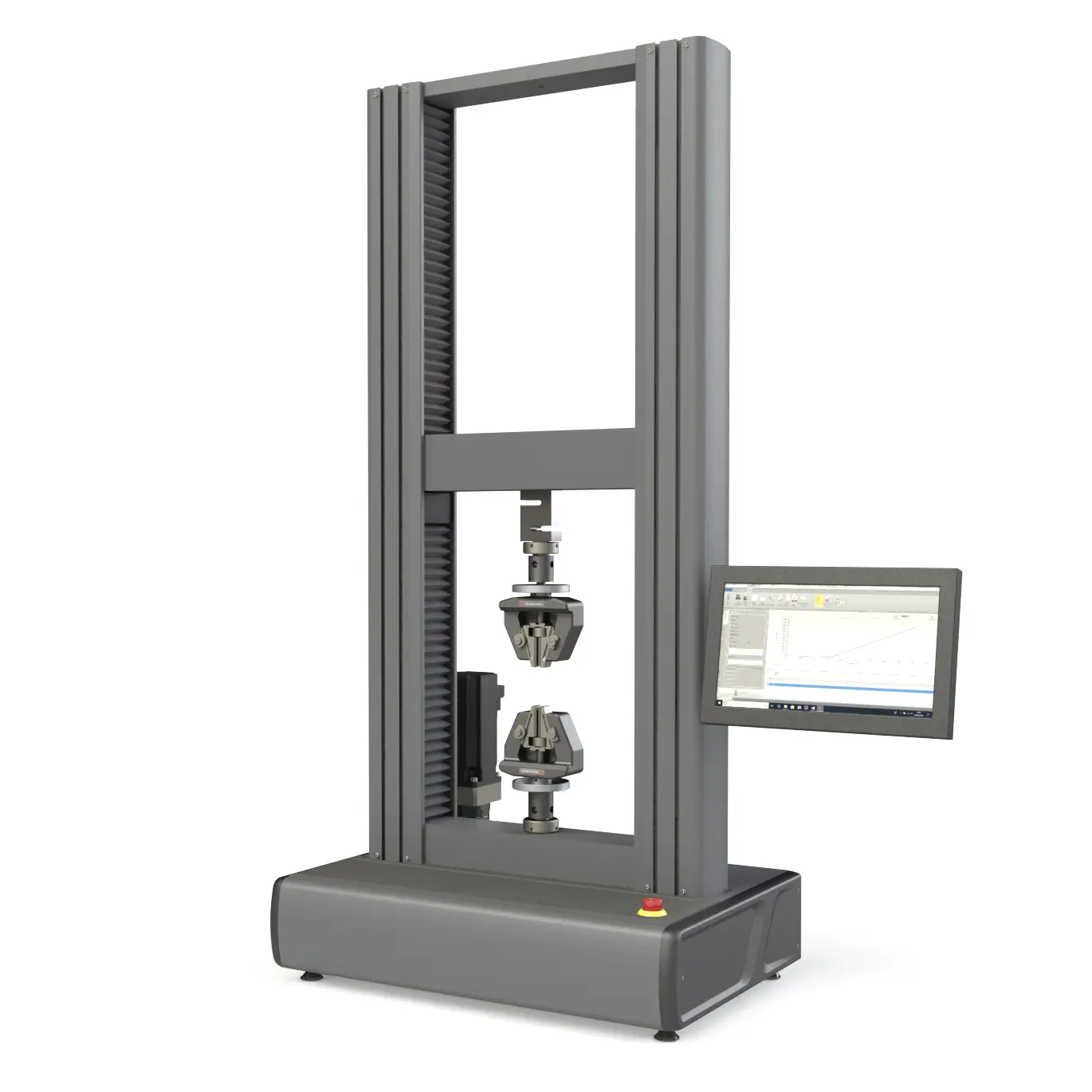
The universal tensile tester is used for performing tension, pressure or bending tests. The classic application is the tensile test. This involves subjecting a sample to an increasing tensile load until it breaks.
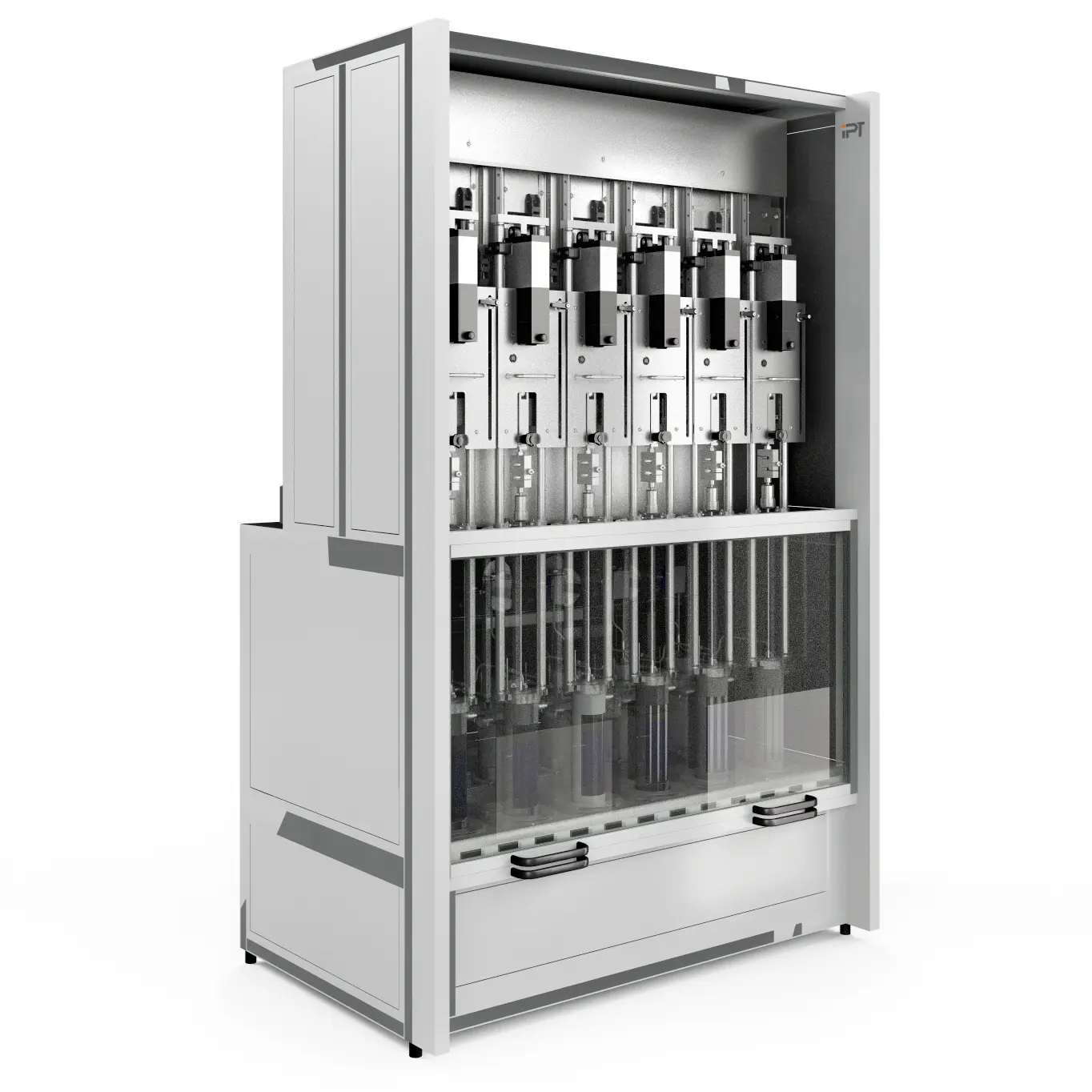
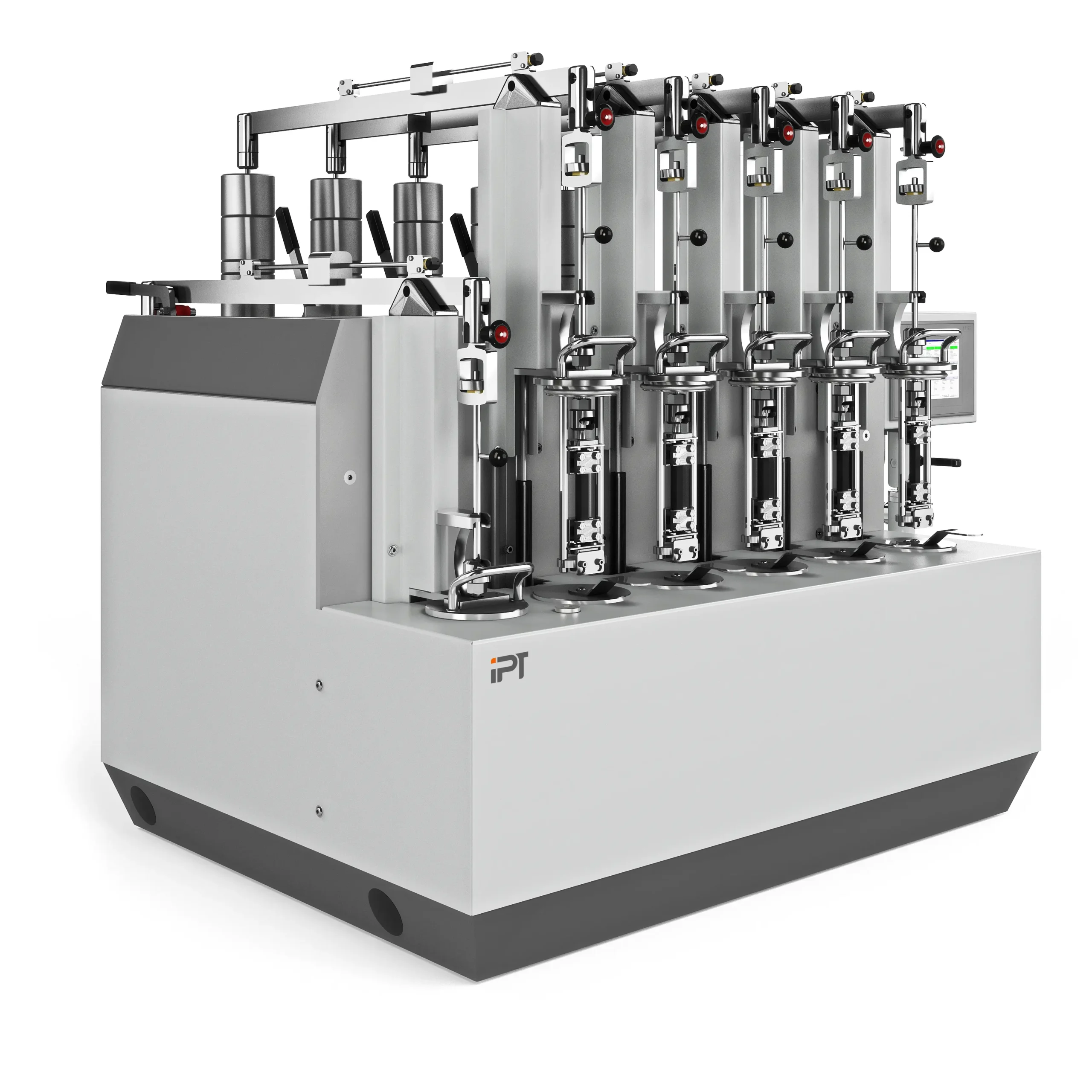
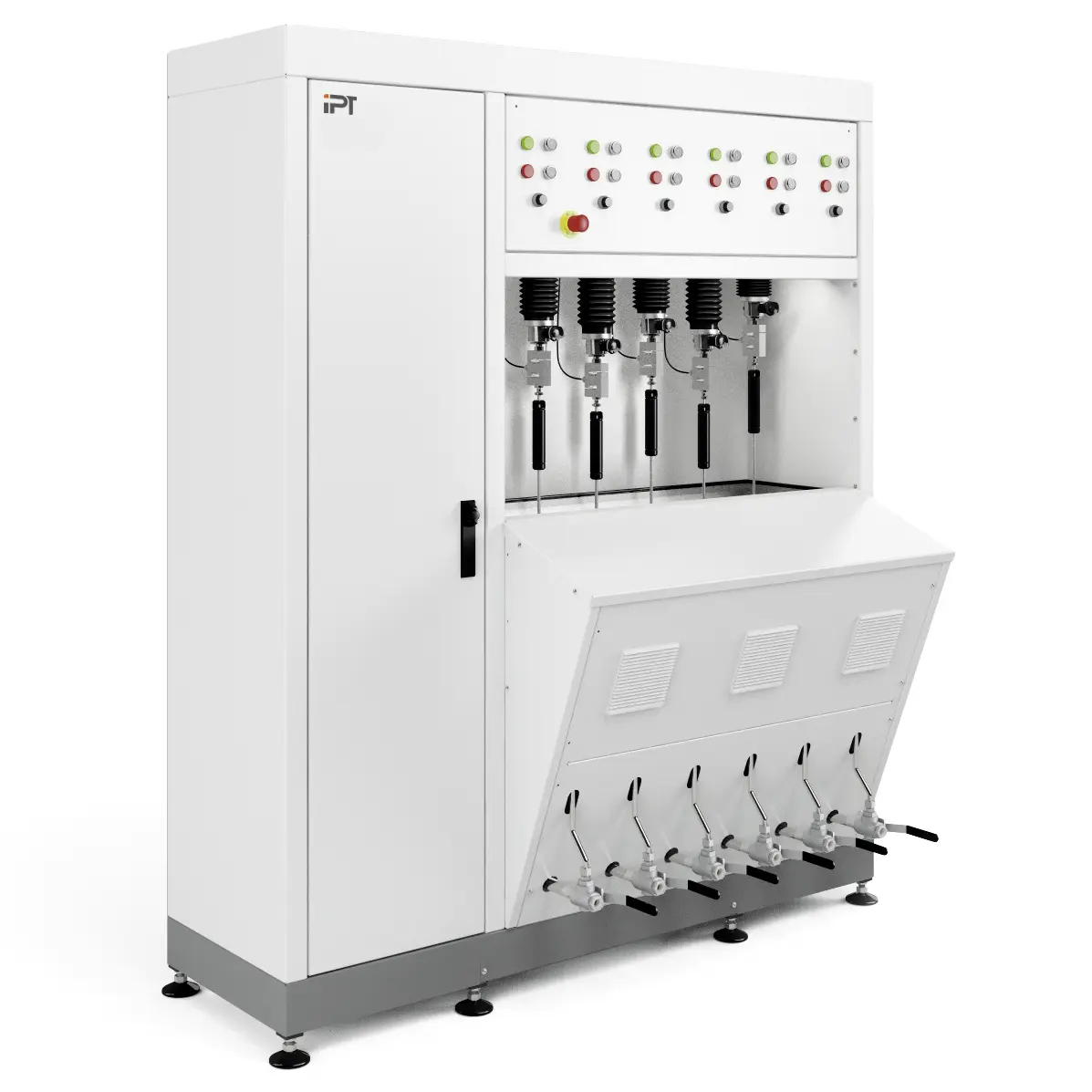
The tensile creep tester is used to determine the stress crack resistance of samples with a circumferential notch (FNCT – Full Notch Creep Test) under media influence.
The tensile creep tester is used to determine the stress crack resistance of samples with a circumferential notch (FNCT – Full Notch Creep Test) under media influence.
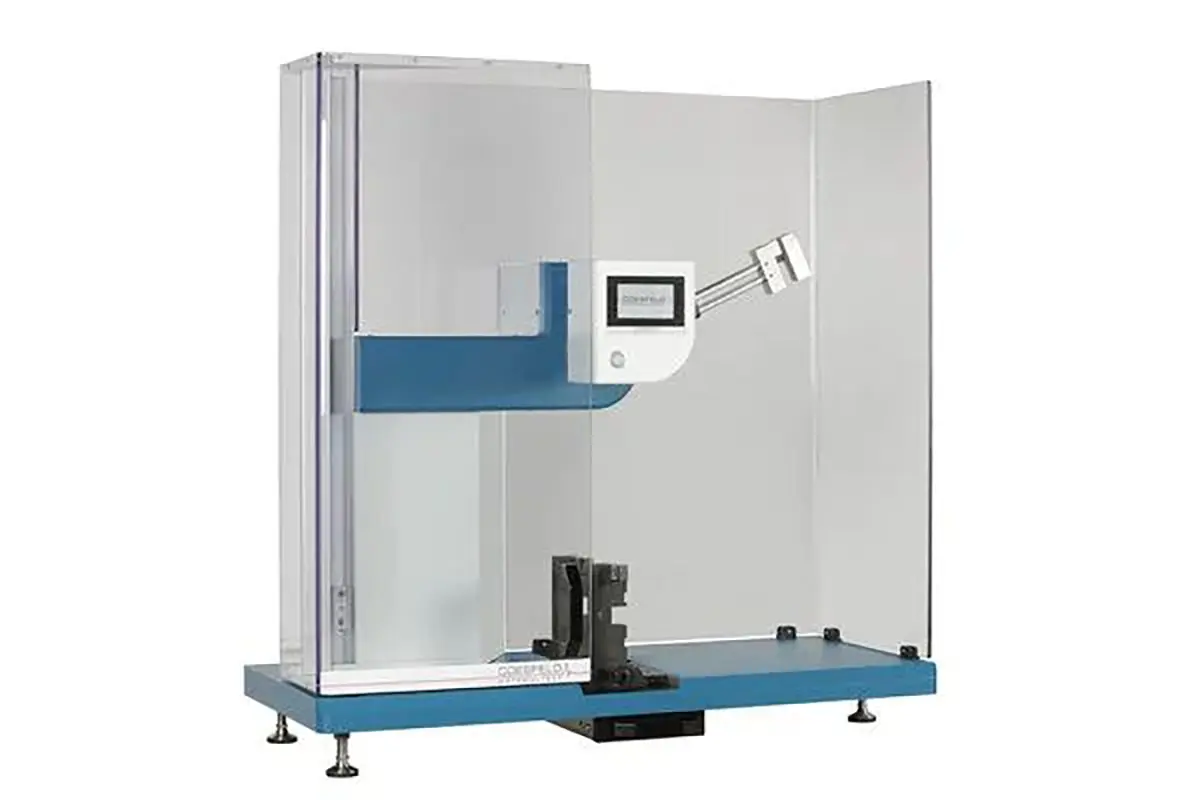
The pendulum impact tester enables testing across the entire spectrum of plastic impact testing, Charpy, Izod, impact and Dynstat in accordance with ISO and ASTM standards.
The CNC test bar milling machine enables bar-shaped plastic samples to be produced for tension, pressure, bending and flexural impact tests in accordance with a wide range of standards.