?

Revolutionary testing system

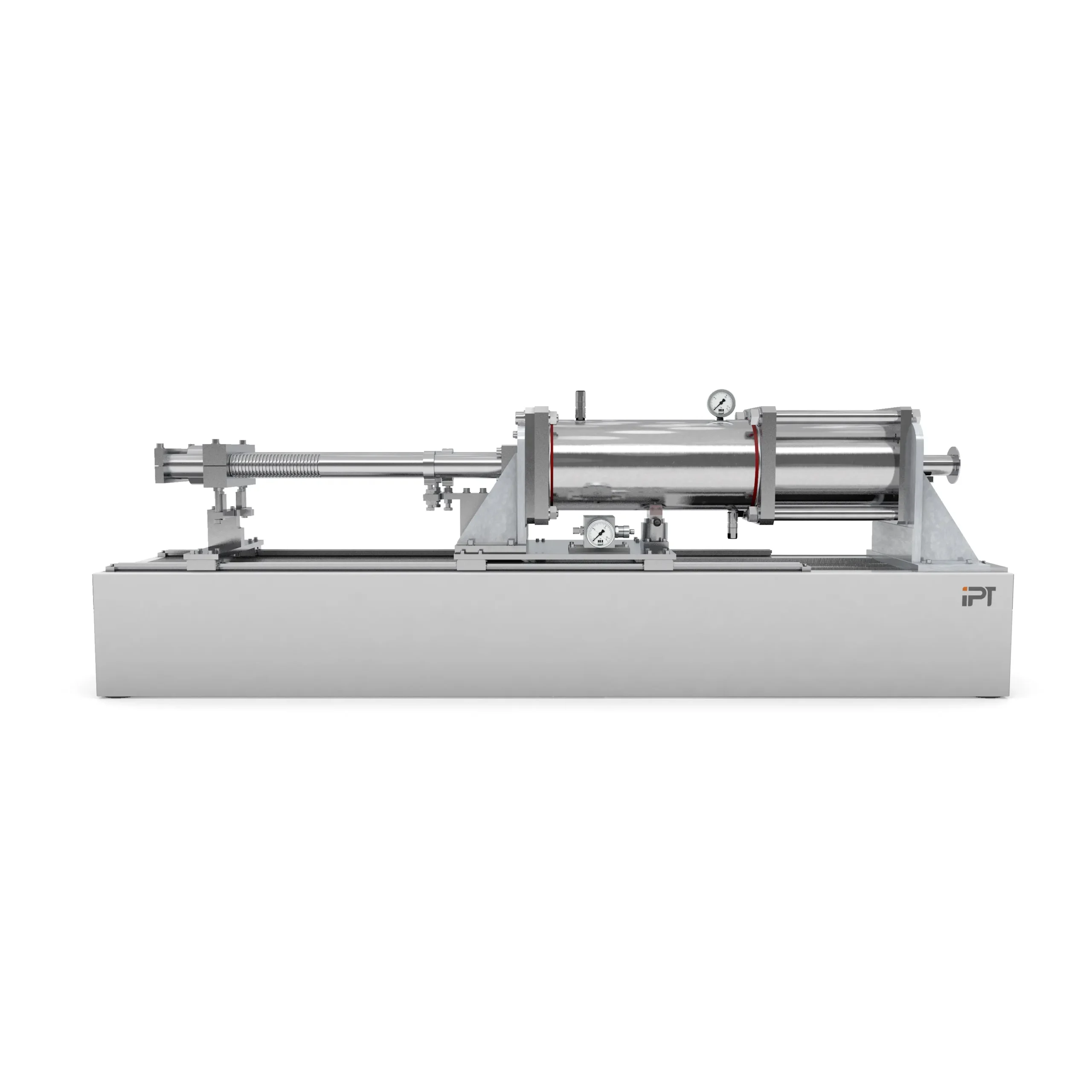
HAT-Tester

Redefining axial pipe testing

To ensure the safe and reliable design of plastic and composite pipe systems, it is crucial to accurately assess their structural integrity. This involves evaluating how pipes and fittings behave under axial tensile loads, which may be applied during installation (e.g. when pulling or laying) or during operation due to sustained pressure, thermal influences, or ground movements. Conventional axial tensile testing of entire composite pipes and larger-diameter plastic pipes is often impractical due to the high-performance testing machines and associated costs required. The Hydro-Axial Tension (HAT) method was developed to overcome these challenges.

Standards

Keine Standards gefunden

  • ISO/CD 19521-1
  • ISO/CD 19521-2

Downloads

Features and Functionality

The HAT test of the entire pipe is performed using the pressure equipment available in a typical pipe testing laboratory.
Most typical plastic pipes can be tested axially at pressures of less than 100 bar.
The HAT method is a practical and cost-effective way to evaluate the axial tensile strength and joint integrity of pipes where conventional axial tensile testing of the entire pipe is too costly.
The testing device is operated via the IPT user interface.

Periphery and Complementary

  • Tests on finished products
  • Internal hydrostatic and quick burst test equipment

The purpose of this tester is to apply and maintain the correct hydrostatic pressure for internal pressure creep tests.

Available from July!

Standards

  • ISO 1167
  • ASTM D 1598
  • ASTM D 1599
  • Tests on finished products
  • Internal hydrostatic and quick burst test equipment
The purpose of this tester is to apply and maintain the correct hydrostatic pressure for internal pressure creep tests. Bursting pressure tests can also be optionally performed. Up to 9 modules – equivalent to 45 stations.

Standards

  • ISO 1167
  • ASTM D 1598
  • ASTM D 1599
  • Tests on finished products
  • Internal hydrostatic and quick burst test equipment
Our BasicLine product version has been specifically developed for flexible laboratory applications where compact design and mobility are key priorities. The system is small, space-saving, and easily movable – making it ideal for laboratories with limited space or changing locations.

Standards

  • ISO 1167
  • ASTM D 1598
  • ASTM D 1599
  • Tests on finished products
  • Internal hydrostatic and quick burst test equipment

For mid-level testing demands, the Airless BlueLine ensures pressure control at maximum adjustment precision and consistency.

Up to 6 modules – equivalent to 30 stations.

Standards

  • ISO 1167
  • ASTM D 1598
  • ASTM D 1599

The product family

  • Tests on finished products
  • Internal hydrostatic and quick burst test equipment
Whether in quality assurance, laboratory environments, or production – the 1730 delivers reproducible, standards-compliant results and ensures maximum process reliability.

Standards

  • ISO 3503
  • DVGW W 543
  • Tests on finished products
  • Tests on raw materials
The tensile creep tester is used to determine the stress crack resistance of samples with a circumferential notch (FNCT – Full Notch Creep Test) under media influence. 

Standards

  • ISO 16770
  • Tests on finished products
  • Additional testing equipment
The resistance of pipes to slow crack growth under external point loads can be determined using a point load test.

Standards

  • PAS 1075