?

Determining the critical pressure

RCP-S4-TESTER

Reliably determining the critical pressure for crack propagation

The RCP-S4 tester model 1671 is developed to perform tests on pipes up to DN 630. Due to the required sample length of 7xDN according to ISO 13477 and the end closures, anvil, external cage and the internal compression plates required in the standard, there are enormous difficulties with handling as a result of the dimensions and weight, something which makes carrying out the test manually impossible. Standard-compliant implementation of the test, which requires the crack to be initiated within just 3 minutes after removal from the conditioning environment, becomes practically impossible in manual processes, as the sample has to be correctly positioned under the striker blade in this brief period and the pressure is also to be built up within the sample. 
Standards

Keine Standards gefunden

  • ISO 13477

Downloads

Features and Functionality

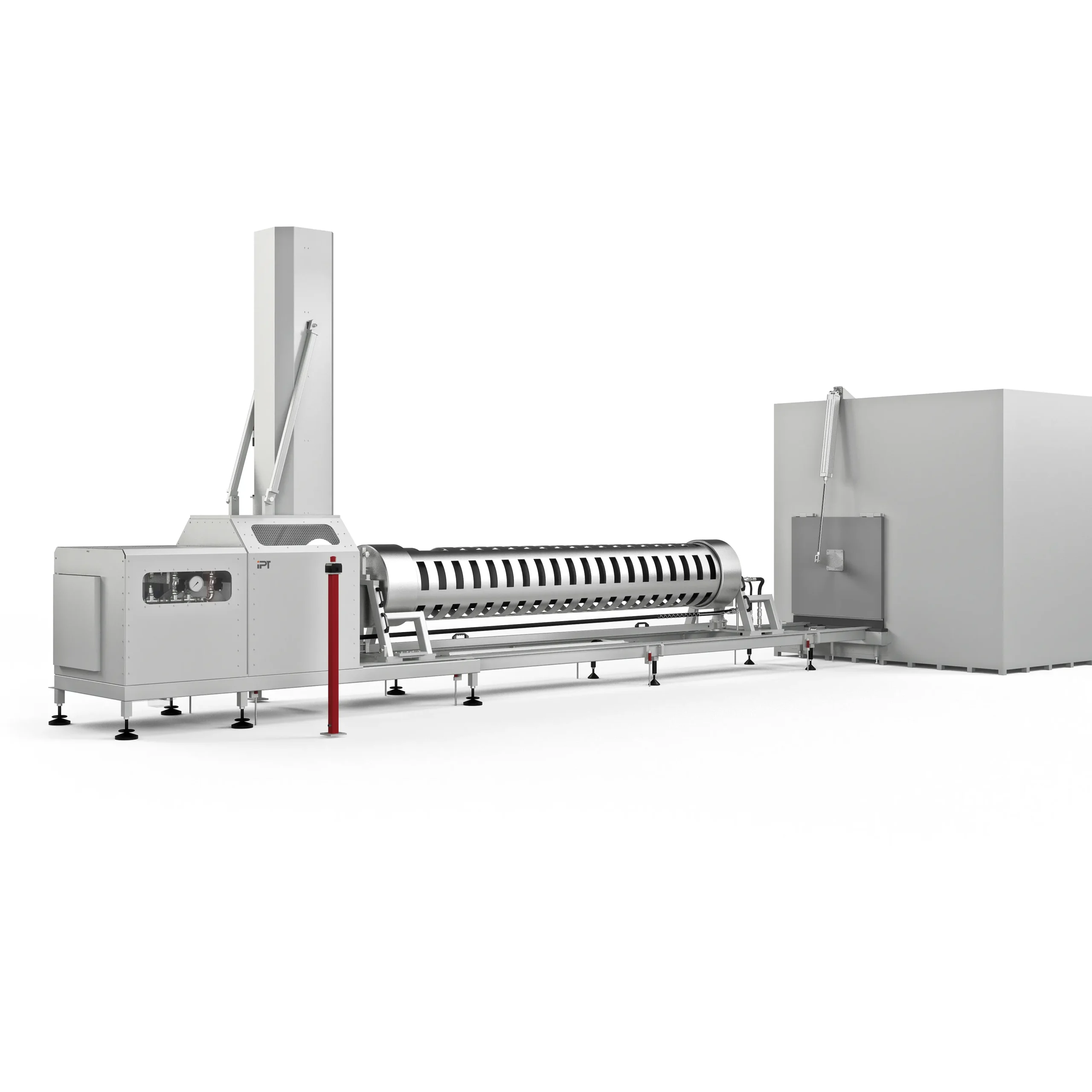
Automatic sample feed: The RCP tester is connected to the cooling cabinet via rails. A motorized trolley can be moved from the cold store to the tester via these rails through a pneumatically operated opening flap in the side wall of the cooling cabinet. Once the sample has been mounted, it is fixed in place on the trolley in a corresponding mount and connected to the pressure supply.
The test specimen is then transferred to the cooling cabinet for the specified time for conditioning.
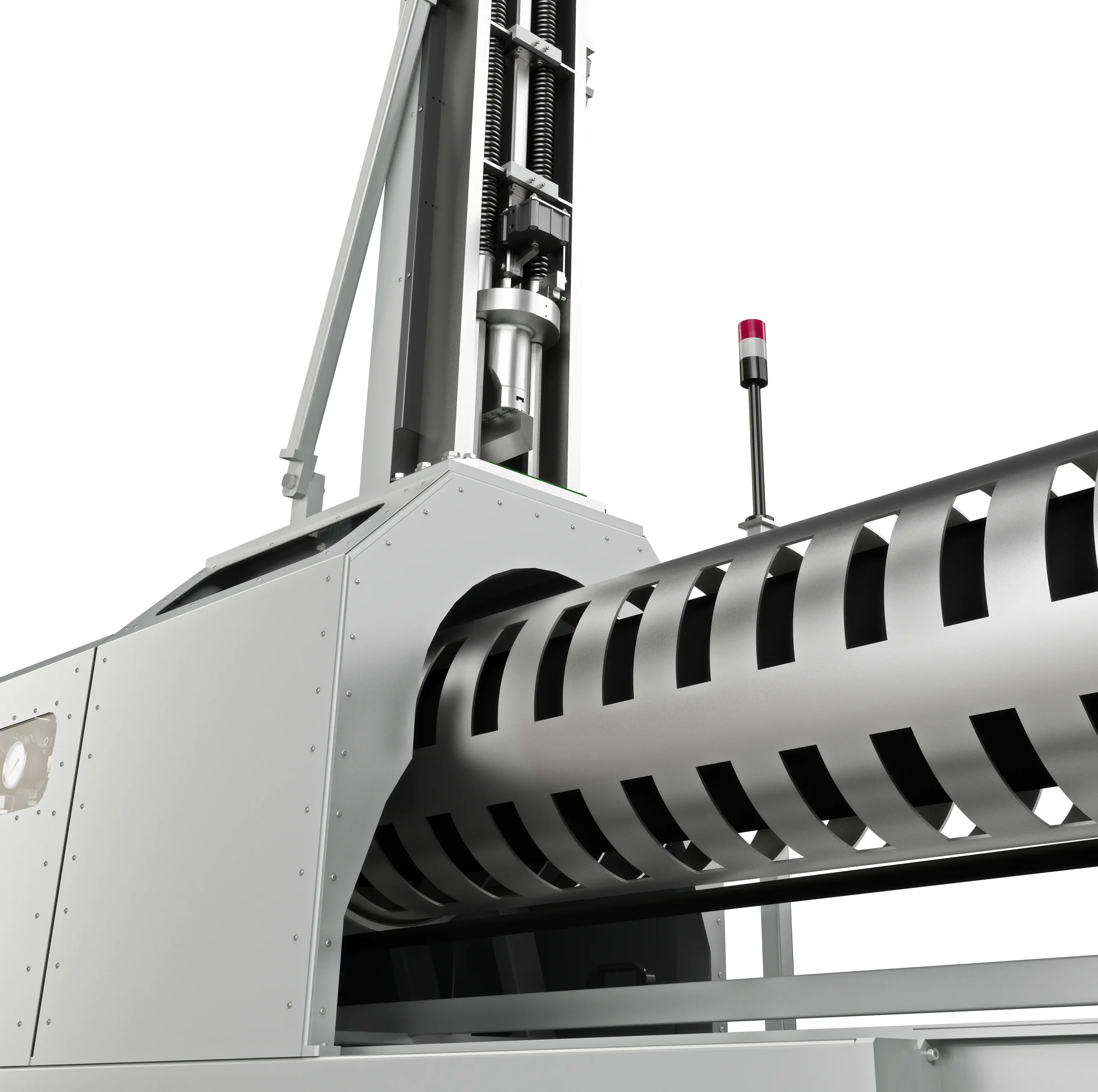
Once the conditioning time has elapsed, automatic removal of the sample from the cooling cabinet is triggered. The sample is moved under the striker blade in this process and the pressure starts to be built up while it is still being moved. Operation and visualisation are carried out using the operator terminal with touchscreen. It is installed to protect the operator outside the protected area to be established at the customer’s premises (danger of flying plastic parts!).
Position sensors: The correct position of the sample under the striker blade is automatically queried and ensured using the corresponding sensor system and triggering of the striker blade is prevented if the sample is not present.
Conformity and safety: The process described previously was designed, developed and examined together with leading material manufacturers and ensures both standard-compliant implementation of the test and a high degree of safety.
Variable speed of the striker blade: In addition to the speed of the striker blade of 15 m/s required in the standard, the speed can also be set to 10 or 20 m/s for research purposes. Increasing the speed to a maximum of the tolerance range required in the standard may be helpful to achieve a crack length of at least 1xDN (see ISO 13477, Art 10.1). The actual impact speed is detected for each test using high-speed photoelectric barriers and output via the display on the control cabinet.

Periphery and Complementary

  • Sample preparation

The walk-in cooling chamber is used to condition specimens to the preset temperature.

Standards

  • ISO 3126